
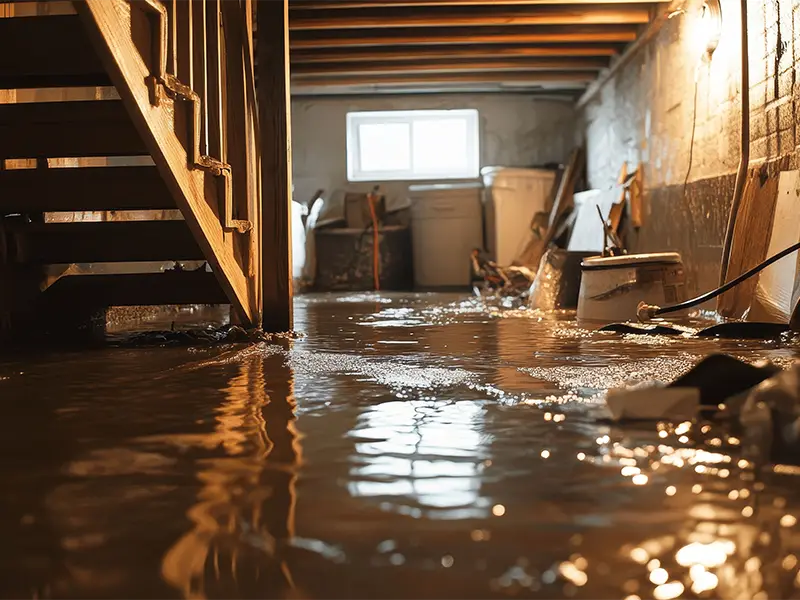
Mold after a sewage backup is a two-part problem: the sewage itself, which carries human waste and has to be removed and disinfected, and the moisture it leaves behind, which lets mold grow if wet materials are not dried within 24 to 48 hours. The EPA is direct about who should handle it: if the water or mold damage was caused by sewage or other contaminated water, call in a professional who has experience cleaning and fixing buildings damaged by contaminated water.
Key Takeaways
- Sewage is Category 3 black water under the ANSI/IICRC S500 standard. EPA guidance says personal protective equipment and containment are required by OSHA when water is contaminated with sewage.
- The EPA says that if wet or damp materials are dried 24 to 48 hours after a leak or spill, in most cases mold will not grow. Treat that window as a target for acting fast, not a guarantee.
- Do not run fans until the water is known to be clean or sanitary. That is the EPA’s own instruction, and it applies to every sewage backup.
- Carpet, pad and other porous materials soaked by sewage are generally removed, not dried.
- Sewer backups are not covered by a typical homeowners policy or by flood insurance without a separate endorsement, according to the Insurance Information Institute.
Can Mold Grow After a Sewage Backup?
Yes. The EPA explains that mold may begin growing indoors when mold spores land on surfaces that are wet, and that no type of mold will grow without water or moisture. A sewage backup delivers the water, usually into a basement where drywall, carpet and framing soak it up.
Timing matters most. The EPA says it is important to dry water-damaged areas and items within 24 to 48 hours to prevent mold growth. After a backup, that drying cannot safely start until the sewage is removed and the area is disinfected, which is one reason the job moves quickly into professional hands.
Is Black Water Mold More Dangerous Than Ordinary Mold?
The added risk is the black water, not a special kind of mold. A backup leaves two hazards:
- The sewage. The CDC lists wound infections, skin rash and gastrointestinal illness among the results of exposure to contaminated floodwater, which can contain human waste. It advises covering open wounds with a waterproof bandage.
- The mold. The EPA says molds produce allergens, irritants and, in some cases, potentially toxic substances (mycotoxins), and that mold exposure can irritate the eyes, skin, nose, throat and lungs of both mold-allergic and non-allergic people.
Color does not tell you how dangerous a mold is. The CDC says you do not need to know the type of mold, and that no matter what type of mold is present, you need to remove it. The CDC adds that people with asthma or mold allergies may have severe reactions, and that immune-compromised people and people with chronic lung disease may get infections in their lungs from mold. Those household members should stay away from the affected area.
What Should You Do in the First Hours After a Sewage Backup?
- Stop using water. Sinks, showers, toilets, the dishwasher and the washing machine all drain into the same line. Every gallon you run can come back up.
- Stay out of standing water near power. The CDC warns never to turn power on or off yourself, or use an electric tool or appliance, while standing in water.
- Keep people and pets out of the affected area, especially anyone in the higher-risk groups above.
- Do not turn on fans. EPA guidance says not to use fans before determining that the water is clean or sanitary. If you suspect the HVAC system is contaminated, do not run it: the EPA warns it could spread mold throughout the building.
- Call a plumber or the sewer utility. On the Front Range, the City of Littleton explains the usual split: the property owner is responsible for the pipe between the sewer main, usually in the street, and the building, while the city clears blockages in the main line. Check with your own city or district.
- Photograph everything before anything is moved or thrown away, then call your insurer.
For a backup that came through a toilet, see our guide to toilet overflow cleanup.
What Does Sewage and Mold Remediation Involve?
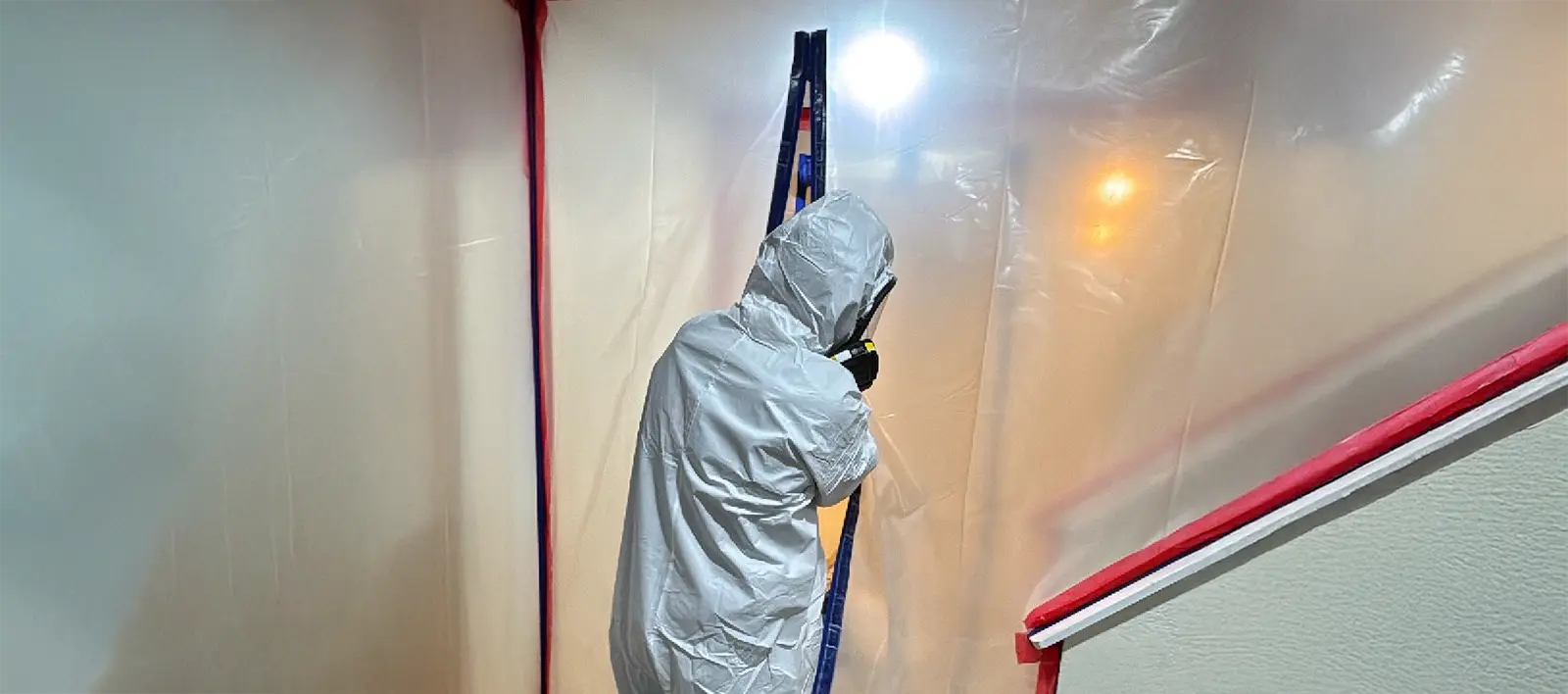
Sewage and mold remediation is the professional process of removing the sewage, disinfecting what can be saved, removing what cannot, drying the structure, and then removing any mold that has started. It runs in roughly this order:
- Assessment. The crew confirms the water category and maps how far it travelled with moisture readings.
- Containment and protection. The EPA notes that when water is contaminated with sewage, personal protective equipment and containment are required by OSHA. The NAU guideline lists rubber gloves, eye protection, a protective suit and rubber boots for anyone working in Category 3 water, plus an evaluation of the need for respiratory protection.
- Extraction. Standing sewage is pumped and vacuumed out. See our guide to water extraction tools.
- Removal of porous materials. Soaked carpet, pad, insulation and drywall come out (see the next section).
- Cleaning and disinfection of the hard surfaces that remain, including the subfloor and framing.
- Drying with dehumidifiers and air movers once the area is sanitary, confirmed with moisture readings rather than by touch.
- Mold removal. The NAU guideline directs that mold remediation follow the IICRC Standard for Professional Mold Remediation (S520). Mold is physically removed, because the EPA says dead mold may still cause allergic reactions in some people, so it is not enough to simply kill it.
- Verification. The EPA says surface sampling by an experienced professional may be useful to determine if an area has been adequately cleaned.
If the work exposes mold, our mold remediation team handles it under containment. When walls and floors have to be rebuilt, see rebuild and reconstruction.
What Has to Be Thrown Away After a Sewage Backup?
Porosity decides it. The EPA explains that mold can grow on or fill in the empty spaces and crevices of porous materials, so it may be difficult or impossible to remove completely, and that absorbent materials such as ceiling tiles and carpet may have to be thrown away if they become moldy.
- Carpet and pad: the NAU guideline allows drying carpet only if it was not wet with Category 3 water for any amount of time. After a sewage backup, plan on replacement.
- Insulation: the EPA’s table for clean water damage already says to discard and replace wet fiberglass and cellulose insulation. Sewage does not improve those odds.
- Drywall: the EPA allows wallboard to be dried in place only if there is no obvious swelling and the seams are intact. The EPA notes that this guidance is for clean water, and that sewage calls for an experienced professional.
- Furniture, bedding and clothing: HomeAdvisor notes that anything black water touches, including upholstered furniture, beds, carpeting, clothing and porous building materials, absorbs contaminants, and that in many cases replacement is cheaper than restoration.
- Hard, non-porous surfaces such as concrete, tile, metal and sealed wood can usually be cleaned and disinfected.

For items that are valuable or sentimental, the EPA suggests consulting a restoration specialist before deciding.
Can You Remove Mold After a Sewage Backup Yourself?
Not the sewage part. The EPA’s general rule is that a moldy area smaller than about 10 square feet can, in most cases, be handled by the homeowner, but the same guidance makes an exception: if the damage was caused by sewage or other contaminated water, call a professional. The EPA also says to consult a health professional before starting cleanup if you have health concerns.
Where you can help is small, surface mold that appears later on hard surfaces after the area has been professionally cleaned and dried. For that, the EPA recommends gloves, goggles and an N-95 respirator, and the CDC gives this method for mold on hard surfaces:
- Mix 1 cup of bleach in 1 gallon of water, using regular, unscented household bleach with a sodium hypochlorite concentration between 5 and 9 percent.
- Wash surfaces with the bleach mixture, and scrub rough surfaces with a stiff brush.
- Rinse with clean water and allow to air dry.
- Never mix bleach with ammonia or any other cleaner.
The EPA adds that biocides such as bleach are not recommended as a routine part of mold cleanup, that the area should be ventilated with air exhausted outdoors when they are used, and that moldy surfaces should not be painted or caulked over.
Where Does Hidden Mold Grow After a Sewage Backup?
Mold after a backup is often out of sight. The EPA lists places hidden mold grows, including the back side of drywall, wallpaper or paneling, the underside of carpets and pads, inside walls around pipes, and inside ductwork. Signs to watch for in the weeks after cleanup:
- A musty smell where you cannot see the source, which the EPA names as a reason to suspect hidden mold
- Staining, bubbling paint or swelling at the bottom of walls and trim
- Humidity that stays high. The EPA recommends keeping indoor humidity below 60 percent, ideally between 30 and 50 percent
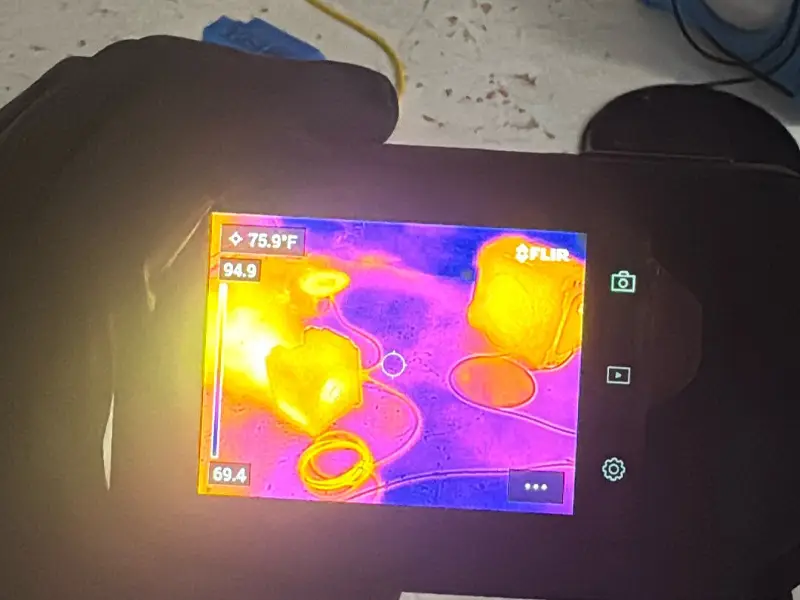
The EPA cautions that investigating hidden mold can release a large number of spores, and suggests hiring an experienced professional. A mold inspection checks wall cavities and moisture levels without spreading the problem. For mold from clean water leaks, see our guide to mold after water damage.
How Much Does Mold Remediation After a Sewage Backup Cost?
National figures from HomeAdvisor:
- Black water cleanup: about $7 to $7.50 per square foot to remove black water, not including repairing and replacing contaminated items (water damage cost guide, updated June 17, 2026).
- Mold remediation: an average of $2,368, with a normal range of $1,223 to $3,757 and most jobs between $10 and $25 per square foot. HomeAdvisor’s room ranges include $500 to $3,000 for a basement and $3,000 to $10,000 for an HVAC system (mold remediation cost guide, updated June 19, 2026).
- Testing: $250 to $350 for basic mold testing, and $450 to $800 for more comprehensive testing with lab analysis.
These are national averages, not quotes.
Does Homeowners Insurance Cover Mold From a Sewage Backup?
Often not, unless you have sewer backup coverage. The Insurance Information Institute says sewer backups are not covered under a typical homeowners policy, nor by flood insurance, and that the coverage must be bought as a separate product or an endorsement, usually at a nominal cost. It also says a policy will not cover damage due to lack of maintenance, including mold. The City of Littleton adds that Loss of Use coverage may reimburse lodging, food and living expenses if a home becomes uninhabitable.
Policies differ, so read yours and call your insurer early. Document the damage before cleanup, keep receipts, and list damaged belongings before they are discarded. Our insurance claims process page explains how we work with your adjuster.
How Do You Prevent Another Sewage Backup?
The City of Littleton lists blockages, tree roots, pipe deterioration, and grease, hair and solid materials among the causes of sewer backups. Its prevention advice:
- Pour grease into a container and put it in the trash, not the drain.
- Put all wipes in the trash, even ones labeled flushable. Only toilet paper should be flushed.
- Do not connect French drains, sump pumps or other flood control systems to the sewer.
- Where roots are the cause, replacing the service line with plastic pipe helps keep them out.
After cleanup, keep humidity in the EPA’s 30 to 50 percent range and fix any leak promptly.
Getting Help With Mold After a Sewage Backup in Denver
Prime Restore Solutions LLC is an IICRC Certified Firm serving Denver and the Front Range, available 24/7. Our team includes a NORMI Certified IAQ/Mold Assessor and Certified Mold Remediator. We remove the sewage, take out contaminated materials under containment, disinfect, dry the structure, remove mold and document the loss for your insurer. For a sewage backup that is happening now, call (720) 790-6056.

Learn more about our sewage cleanup and water damage restoration services, and our Denver damage restoration team. Multi-family, HOA, apartment and hotel properties are handled as commercial restoration.
Frequently Asked Questions
How long after a sewage backup does mold grow?
The EPA’s guidance is to dry water-damaged materials within 24 to 48 hours, and says that in most cases mold will not grow if they are dried in that window. After a sewage backup, materials that stay wet longer, or that sit hidden inside walls, are the ones at risk.
Is it safe to stay in a house after a sewage backup?
It depends on how much of the house was affected. Keep everyone out of the contaminated area, and keep children, anyone with asthma or mold allergies, and anyone with a weakened immune system away from the cleanup, which the CDC identifies as higher risk for mold. Do not run the HVAC system if you suspect it is contaminated. If the home is not livable during the work, ask your insurer about Loss of Use coverage.
Do I need mold testing after a sewage backup?
Not to decide whether to remove visible mold. The CDC does not recommend mold testing, and the EPA says sampling is usually unnecessary when mold is visible. The EPA does say surface sampling may be useful to confirm that an area was adequately cleaned, done by an experienced professional.
Sources
- U.S. Environmental Protection Agency, A Brief Guide to Mold, Moisture and Your Home
- U.S. Environmental Protection Agency, Mold Remediation in Schools and Commercial Buildings, Table 1: Water Damage Cleanup and Mold Prevention
- Centers for Disease Control and Prevention, Mold
- Centers for Disease Control and Prevention, How to Safely Clean and Sanitize with Bleach
- Centers for Disease Control and Prevention, Safety Guidelines: Floodwater
- Centers for Disease Control and Prevention, Safety Guidelines: Reentering Your Flooded Home
- IICRC, ANSI/IICRC S500 Standard for Professional Water Damage Restoration
- Northern Arizona University, Water Damage Restoration Guideline
- Insurance Information Institute, Which Disasters Are Covered by Homeowners Insurance?
- City of Littleton, Colorado, Facts About Sewer Backups
- HomeAdvisor, Water Damage Restoration Cost (updated June 17, 2026)
- HomeAdvisor, Mold Remediation Cost (updated June 19, 2026)